Cargo Transportation from Uzbekistan to Europe: Multimodal Logistics Solutions
Cargo transportation from Uzbekistan to Europe requires structured logistics planning and coordination across multiple countries. As a landlocked country, Uzbekistan does not have direct access to sea routes, which means all shipments must move through transit corridors connecting Central Asia with European markets.
In practice, this process is organized using multimodal transport, combining rail, sea, and road delivery. The most efficient and widely used route runs via the Caspian Sea and Black Sea, forming the core of the Middle Corridor.
This logistics chain allows businesses to maintain stable delivery timelines and optimize transportation costs. The average transit time for cargo transportation from Uzbekistan to Europe ranges from 25 to 35 days, depending on routing, cargo type, and operational conditions.
Sofmar provides full-cycle cargo transportation services, ensuring reliable delivery from origin in Uzbekistan to final destinations across Europe.

Delivery Across Europe
After arriving at Black Sea ports, cargo is forwarded to final destinations across Europe.
Key destinations include Germany, Italy, France, Poland, and the Netherlands, which serve as major logistics and distribution hubs within the European Union.
From ports such as Constanta or Varna, cargo is transported inland using road or rail networks.
Delivery times depend on the final destination. Shipments to Central Europe such as Germany or Poland typically take 3 to 5 days, while deliveries to Western or Southern Europe such as France or Italy may take 5 to 7 days.
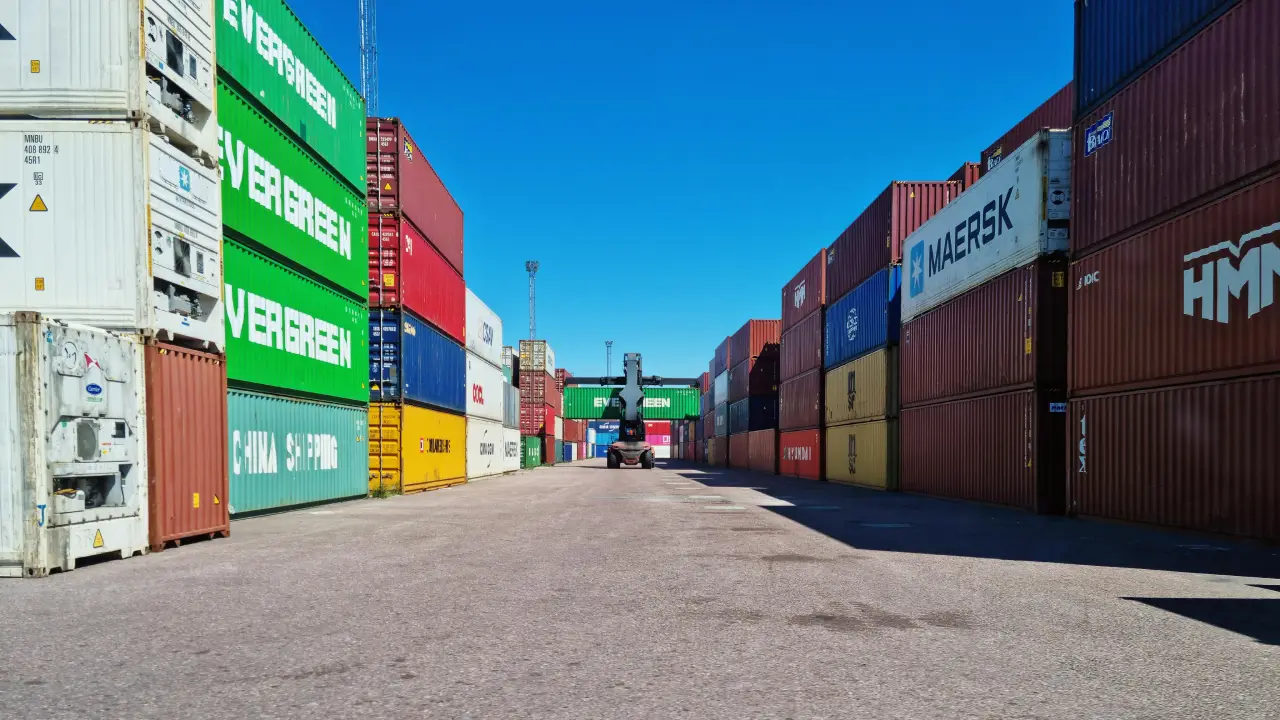
Transportation Options
Full Container Load
Full container shipping is the most efficient option for medium and large shipments.
A 20-foot container can accommodate approximately 28 cubic meters, while a 40-foot container holds up to 60–68 cubic meters.
Maximum cargo weight typically ranges from 20 to 26 tons depending on route limitations.
This format minimizes handling, reduces the risk of damage, and provides more predictable transit times.
Less-than-Container Load
For smaller shipments, cargo transportation is organized using consolidated delivery.
Shipments starting from 1 cubic meter are grouped with other cargo at consolidation warehouses.
This reduces transportation costs, although transit time increases to 30 to 38 days due to additional handling and coordination.

Transit Time Overview
| Shipping Type | Route | Transit Time | Description |
|---|---|---|---|
| FCL 20’ | Tashkent → Aktau → Baku → Poti → Europe | 25–30 days | Stable multimodal route with regular departures |
| FCL 40’ | Tashkent → Kuryk → Baku → Batumi → Europe | 30–35 days | Optimal for large shipments |
| LCL | Tashkent → Aktau → Poti → EU hubs | 30–38 days | Cost-efficient for smaller cargo volumes |
Middle Corridor Advantages
The Middle Corridor is currently the most reliable route for cargo transportation from Uzbekistan to Europe.
It provides a balanced combination of transit time, cost efficiency, and operational stability.
Key advantages include predictable delivery schedules, flexibility in transport modes, and growing infrastructure capacity across transit countries.
The route also allows efficient coordination between rail, sea, and road transport, reducing dependency on a single logistics channel.
Cargo Handling and Risk Management
Cargo transportation across multiple regions requires strict operational control.
Each shipment passes through several handling points, including rail terminals, ports, and border crossings.
To ensure stable delivery, logistics operations include document verification before shipment, coordination with terminals, and continuous cargo tracking.
This approach minimizes delays and ensures that cargo moves smoothly through all stages of the logistics chain.
Cost Factors
The cost of cargo transportation from Uzbekistan to Europe depends on several key factors.
These include cargo volume, weight, shipping format, and selected route.
Full container shipments provide better cost efficiency for larger volumes, while consolidated cargo is more suitable for smaller shipments.
Additional cost factors include port handling, inland transportation within Europe, and seasonal demand fluctuations.
Documentation and Customs
Accurate documentation is essential for smooth transportation.
The standard document package includes a commercial invoice, packing list, transport documents, and certificates if required.
Errors or inconsistencies may lead to delays of 2 to 5 days, additional inspections, or extra costs.
Proper preparation ensures faster customs clearance and stable delivery timelines.
Frequently Asked Questions
How long does cargo transportation from Uzbekistan to Europe take?
Transit time typically ranges from 25 to 35 days, with full delivery taking up to 40 days depending on destination.
What is the main route for cargo transportation?
The primary route is the Middle Corridor via the Caspian Sea and Black Sea.
Which countries are the main destinations?
Germany, Italy, France, Poland, and the Netherlands are the most common destinations.
What is the difference between FCL and LCL?
FCL uses a full container for one shipment, while LCL combines multiple shipments in one container.
Cargo transportation from Uzbekistan to Europe is a multi-stage process that requires precise coordination and reliable transit routes. The Middle Corridor via the Caspian Sea and Black Sea provides the most efficient solution, with transit times typically ranging from 25 to 35 days.
Sofmar is ready to organize cargo transportation from Uzbekistan to Europe, ensuring reliable delivery, full control at every stage, and optimized logistics solutions tailored to your shipment.


