Asia → Europe Multimodal Freight
Multimodal freight transportation between Central Asia and Europe has become one of the most stable and scalable logistics corridors across Eurasia. Exporters from Kazakhstan, Uzbekistan, Kyrgyzstan, and Turkmenistan rely increasingly on a route that combines inland transport, Caspian Sea ferries, Caucasus transit, and Black Sea feeder services.
The Georgian ports of Poti and Batumi play a central role in connecting Asian exporters to European markets, offering predictable lead times and solid infrastructure for containerized and general cargo.
This corridor is now a practical alternative to long overland routes and an essential pathway for companies seeking consistent schedules and competitive transit costs.
Why the Asia → Europe Route Matters for Central Asian Exporters
Central Asian economies are expanding their industrial capacities and diversifying export markets.
The region exports:
• metals, polymers, chemicals (Kazakhstan, Turkmenistan);
• textiles, FMCG, processed goods (Uzbekistan);
• agricultural products (all CA countries);
• machinery, equipment, and mixed industrial cargo.
To reach Europe efficiently, exporters require a route that:
• avoids congested land borders;
• offers predictable transit times;
• supports containerized, LCL, and project cargo;
• provides scalable throughput for growing volumes.
The multimodal corridor through the Caspian Sea and the South Caucasus meets all of these criteria.
Step-by-Step Structure of the Asia → Europe Multimodal Corridor
The route is built on five interconnected transport segments. Its efficiency comes from coordinated movement between ports, railways, roads, and short-sea shipping.
Stage 1: Inland Transport Within Central Asia
Cargo moves by rail or road from major production centers to the Caspian ports:
Kazakhstan — long-distance rail corridors to Aktau and Kuryk.
Uzbekistan — road and rail routes via Tashkent, Navoi, Bukhara towards Kazakhstan.
Kyrgyzstan — transit via Kazakhstan to the Caspian.
Turkmenistan — export flows directed to the port of Turkmenbashi.
This segment typically requires 2–7 days, depending on origin and cargo type.

Stage 2: Caspian Sea Ferry
(Aktau / Kuryk / Turkmenbashi → Baku)**
The Caspian crossing is a short but essential link.
• Approximate crossing time: ~24 hours
• Regular ferry and Ro-Ro services
• Suitable for containerized cargo, trailers, and breakbulk
The reliability of the Caspian schedule is one of the key strengths of the route.
Stage 3: Caucasus Transit (Azerbaijan → Georgia)
After arriving in Baku, shipments move west toward Georgia:
Rail transport — the primary mode for containers and heavy industrial cargo.
Road transport — used for LCL, time-sensitive goods, and flexible routing.
Transit through Azerbaijan and Georgia usually requires 2–3 days, supported by upgraded rail lines, modern highways, and streamlined customs coordination.
Stage 4: Export Hubs — Ports of Poti and Batumi
Both Georgian ports serve as major gateways to European feeder networks.
• Largest container terminal in Georgia
• Strong processing speed and stable schedules
• Well-integrated with regional rail networks
• Handles containers and general cargo
• Flexible operations, suitable for diverse cargo types
These ports consolidate Central Asian exports and connect them to Black Sea and Mediterranean maritime routes.
Stage 5: Black Sea Feeder Services → European Ports
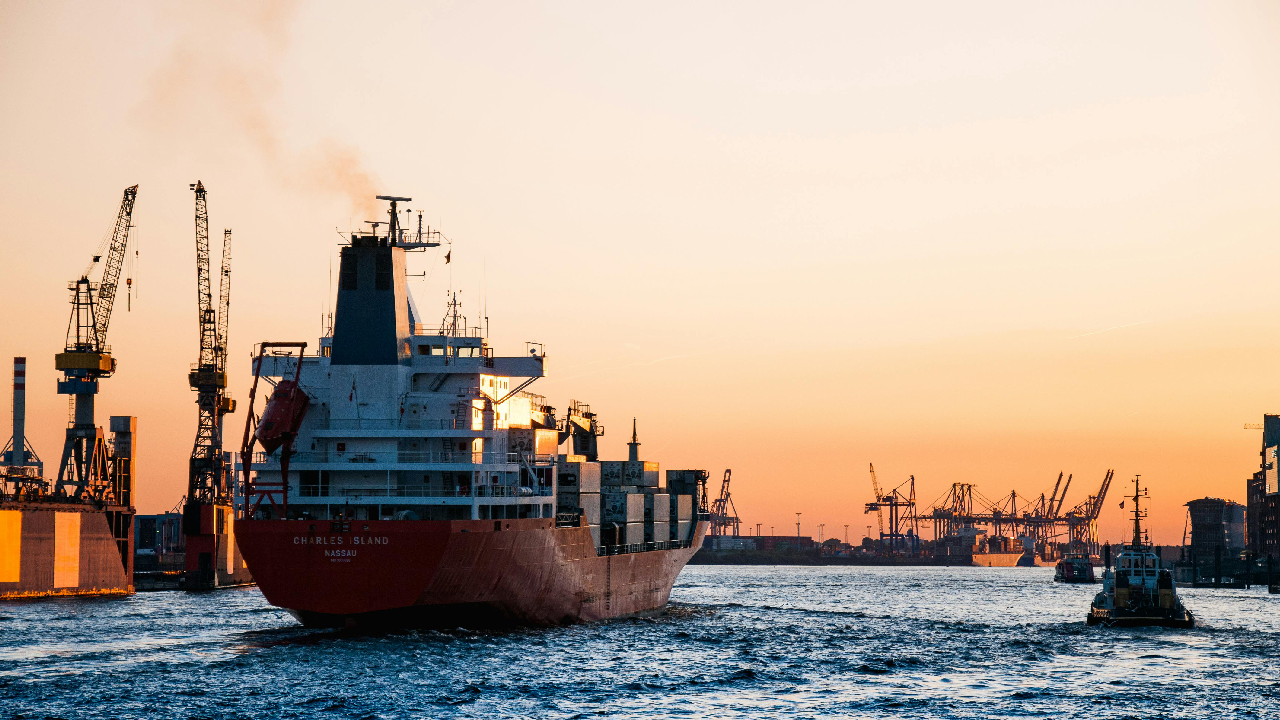
From Poti and Batumi, vessels connect to multiple European gateways:
• Constanța (Romania) — primary Black Sea hub
• Varna, Burgas (Bulgaria)
• Istanbul / Marmara ports (Turkey)
• Piraeus (Greece)
• Trieste (Italy)
Shipments then move inland by European rail or road to Germany, Poland, Italy, France, the Czech Republic, and other destinations.
Typical maritime transit from Georgia to EU ports takes 4–10 days.
Transit Time Overview
| Route Segment | Estimated Transit Time (Days) |
|---|---|
| Inland transport within Central Asia (KZ, UZ, KG, TM) | 2–7 |
| Caspian ferry (Aktau / Kuryk / Turkmenbashi → Baku) | ~1 |
| Caucasus transit (Baku → Tbilisi → Poti / Batumi) | 2–3 |
| Black Sea feeder services to EU ports | 4–10 |
| Final delivery within the European Union | 1–5 |
| Total Asia → Europe transit | 10–25 |
These figures represent standard operational ranges and may vary depending on seasonality, port congestion, vessel schedules, and cargo category.
Cargo Types Supported by the Corridor
The Asia → Europe multimodal route is suitable for:
• 20’ / 40’ / 40HC containers
• LCL and small consolidated shipments
• Textiles, FMCG, processed goods
• Metals, chemicals, polymers
• Agricultural cargo
• Machinery and industrial equipment
• Project cargo, including oversized units
• Temperature-controlled shipments (reefer containers)
This versatility makes the corridor attractive for a broad spectrum of exporters across the region.
Why This Corridor Is Effective for Asia → Europe Flows
1. Predictable transit times
Avoids congested land borders and long overland alternatives.
2. Short sea legs (Caspian + Black Sea)
Improves timetable reliability and minimizes disruptions.
3. Scalable capacity
Caucasus rail and port infrastructure can support significant transit growth.
4. Balanced cost–time ratio
Faster than long all-land routes and more economical than air transport.
5. Full multimodal integration
All segments can be tracked, coordinated, and optimized as a single chain.
Sofmar’s Role in the Asia → Europe Multimodal Corridor
Sofmar provides full-cycle coordination for multimodal freight movements from Central Asia to Europe via the Caspian Sea, Azerbaijan, Georgia, and the Black Sea ports of Poti and Batumi.
The company’s capabilities include:
• designing end-to-end Asia → Europe multimodal solutions;
• organizing rail and road transport across Kazakhstan, Uzbekistan, Azerbaijan, and Georgia;
• managing Caspian Sea ferry bookings and port operations;
• coordinating feeder services from Georgia to European gateways;
• handling containerized, general, and project cargo;
• arranging customs documentation and regulatory compliance;
• providing unified tracking across all transport segments.
Sofmar supports exporters across a wide range of industries, ensuring stable schedules, competitive transit costs, and reliable access to European markets.


